Why Artificial Turf Gets So Hot in Henderson, and What Actually Cools It
Turf surface temperature is real, it is dangerous for dogs, and half the products sold to fix it do very little.
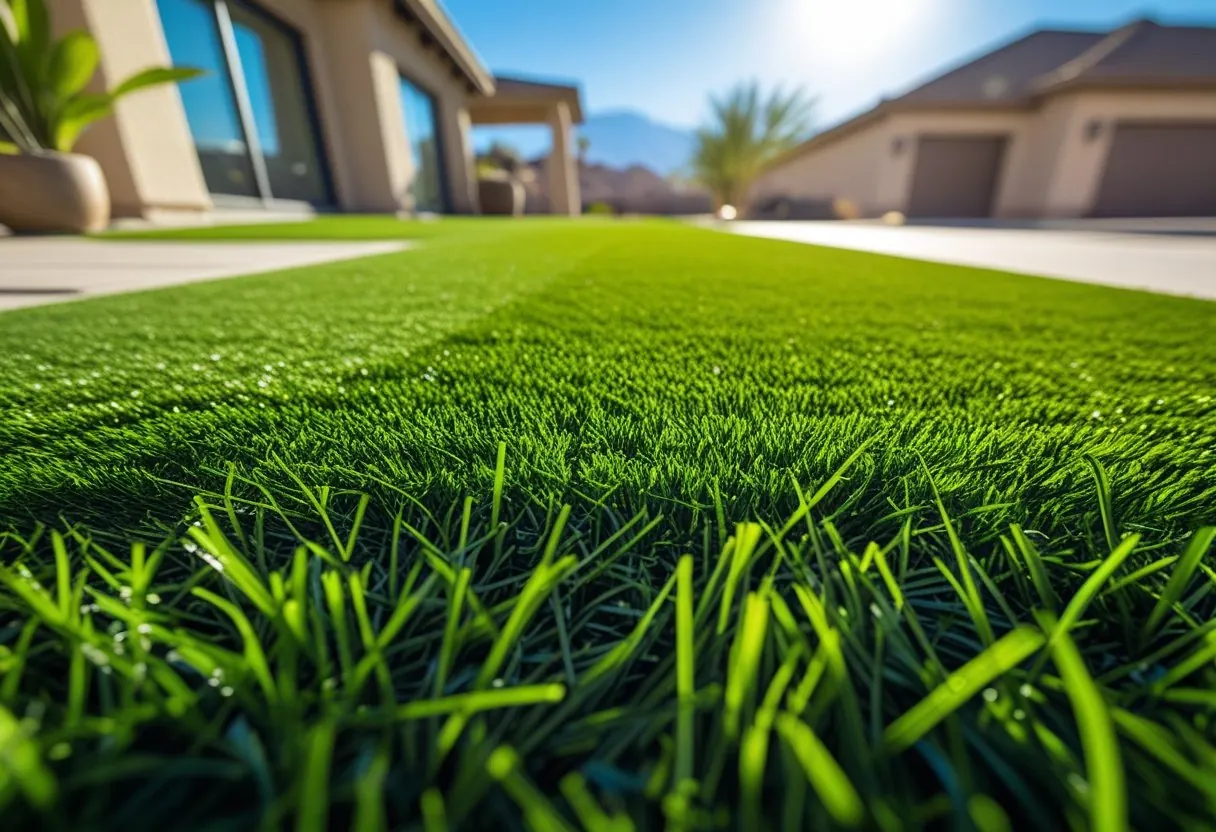
Artificial turf gets hot. In Henderson in July, turf surface temperature runs far above ambient air temperature and well above what a paw or a bare foot tolerates. This is the most common genuine complaint about turf in this climate and it deserves a straight answer rather than a product pitch.
What is actually happening
Polyethylene fibre absorbs solar radiation and has nowhere to send it. Natural grass stays cool because it transpires: water moves through the plant and evaporates, carrying heat away. Turf has no such mechanism, so incoming energy becomes surface temperature until something removes it.
The variables that matter, roughly in order of effect:
- Direct sun exposure and duration. Overwhelmingly the largest factor. Shade is worth more than every product on the market combined.
- Infill volume and type. Infill mass buffers heat. A lawn short on infill runs hotter than the same turf at correct depth, which is a free improvement most people are unaware of.
- Fibre colour and density. Darker, denser turf absorbs more. There is nothing to be done about this after installation.
- Airflow. Enclosed courtyards in Tuscany and walled side yards trap hot air and run hotter than open lawns in the same sun.
- Reflected load. Low-E window glass, light stucco, and pool surrounds can concentrate reflected radiation onto a strip of turf. In extreme cases this melts fibre.
What genuinely works
| Measure | Effect | Worth it? |
|---|---|---|
| Shade: sail, tree, pergola | Large. The only intervention that changes the underlying problem. | Yes, by a wide margin |
| Rinse before use | Large but brief. Evaporative cooling lasts 20-40 minutes here. | Yes, for timed pet use |
| Infill at correct depth | Moderate and permanent. Thermal mass buffers the peak. | Yes, and it fixes other problems too |
| Cooling infill (TPE, acrylic-coated) | Moderate. Real but oversold. | At installation, not as a retrofit |
| Misting system | Large while running. Water cost is significant. | Situational |
| Light-colour turf | Moderate. Only decided at installation. | Consider on a replacement |
| Surface "cooling sprays" | Minimal to none beyond the wetting effect. | No |
The dog question
This is the part that matters most. Dogs cannot tell you the surface is too hot until they are already hurt, and paw pad burns from turf are a genuine summer veterinary presentation in this valley.
- Use the back of your hand. Hold it flat on the turf for seven seconds. If you cannot, neither can your dog.
- Avoid the peak. Between roughly 11am and 5pm from June to September, keep dogs off unshaded turf entirely.
- Rinse before letting them out. Thirty seconds with a hose buys a genuinely usable window.
- Provide a shaded relief zone. A shade sail over the corner the dog actually uses is cheap and solves the practical problem.
- Keep the infill at depth. It is not a headline cooling measure but it is real, permanent, and you should be doing it anyway.
Written by the Henderson Turf Cleaners crew, Henderson NV. Questions about your own lawn? Call (702) 819-7749 or request a free on-site inspection.